
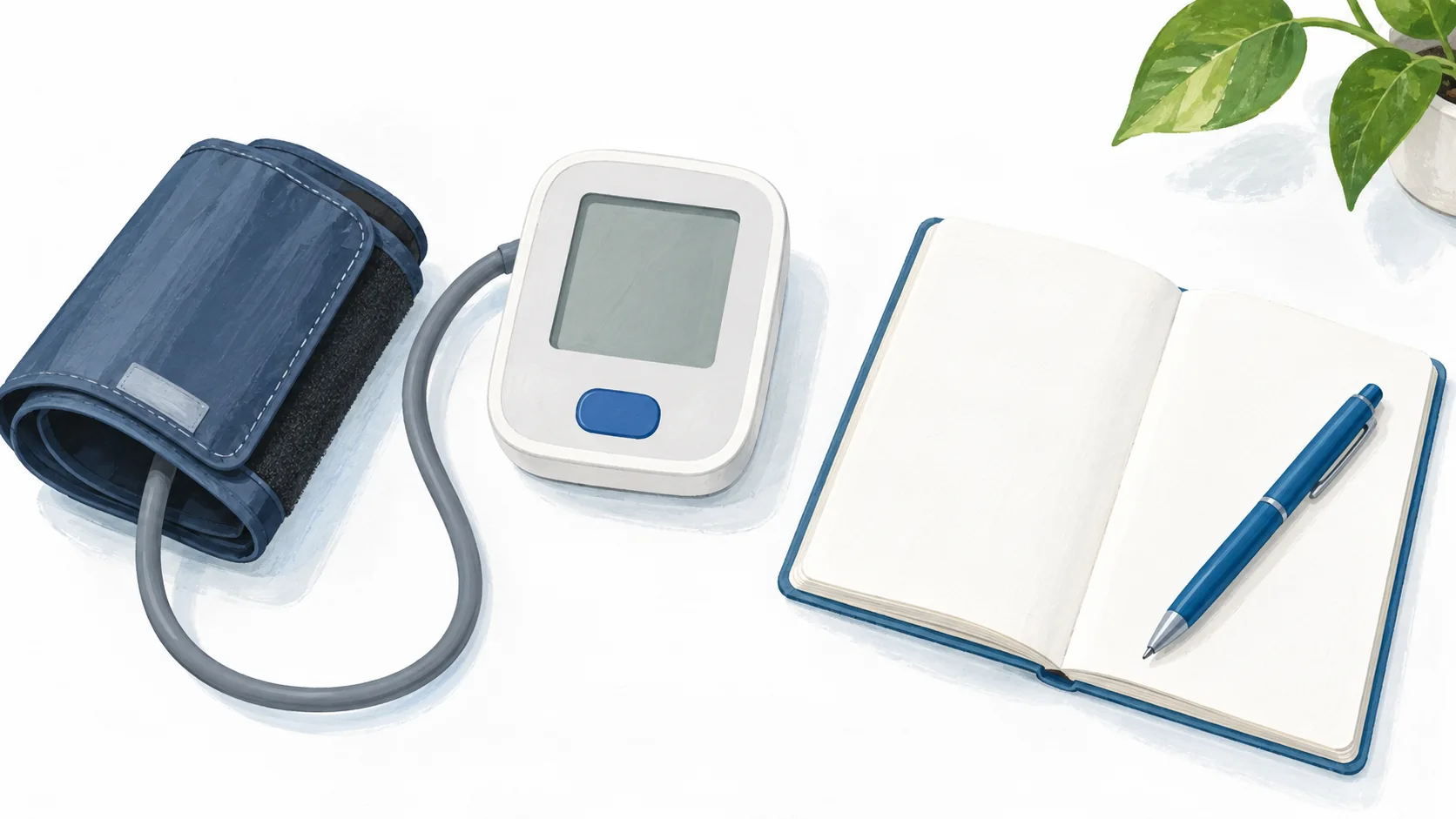
When you read a blood pressure result, use the adult ranges to understand its category and decide what to ask a healthcare professional.
What the two numbers measure
The first, or top, number is systolic pressure. It measures pressure in the arteries when the heart beats. The second, or bottom, number is diastolic pressure. It measures pressure while the heart rests between beats. Blood pressure is recorded in millimeters of mercury, abbreviated mm Hg. A reading of 128/82 means 128 mm Hg systolic and 82 mm Hg diastolic.
How adult ranges apply
For adults, normal blood pressure is below 120 systolic and below 80 diastolic. Elevated blood pressure is a systolic reading from 120 to 129 with a diastolic reading below 80. Stage 1 is a systolic reading from 130 to 139 or a diastolic reading from 80 to 89. Stage 2 is a systolic reading of 140 or higher or a diastolic reading of 90 or higher.
The category is based on whichever number falls in the higher range. For example, 128/82 has a systolic value in the elevated range and a diastolic value in the stage 1 range. The reading is therefore in the stage 1 range because the diastolic value is 82. That category describes the reading; it does not confirm a diagnosis.
One measurement may not reflect a person’s usual blood pressure. A healthcare professional considers readings in context and confirms a diagnosis. If a result is higher than expected, its category can help you describe what you saw, but the category alone cannot determine what follow-up is right for you.
Measure carefully and know when to get help
Before measuring at home, avoid smoking, caffeine, and exercise for 30 minutes. Empty your bladder, then sit quietly for at least five minutes. Sit with your back supported and your feet flat on the floor. Put the cuff on bare skin, with your supported arm at chest height. Stay still and do not talk during the measurement. Use a monitor with a cuff that fits properly. If you are unsure about the fit or how to use it, ask a healthcare professional to check your technique.
Take two readings, one or two minutes apart, and write down both. Record the date and time. Add notes that may help explain a result, such as recent exercise. Keep your readings together so you can share them with your healthcare professional. Ask how often to measure and what results should prompt you to get in touch.
If a reading is higher than 180 systolic and/or 120 diastolic, wait one minute and measure again. If the second reading is still that high, contact a healthcare professional. If you also have chest pain, shortness of breath, weakness, back pain, numbness, a change in vision, or difficulty speaking, call 911. Keep your readings available when you ask about follow-up.