
What your HbA1c tells you
HbA1c, often called A1C, is a blood test that reflects your average blood sugar over about three months. Your clinician uses it alongside other information to understand how your diabetes care is going. Your target should be personal: age, other health conditions, and the risk of low blood sugar can affect the goal you agree on.
If your result is higher than expected, bring your questions to your next visit. Food choices are one part of your care plan. Your care team can help you decide which changes fit your daily life and whether your treatment needs adjusting.
Start with your plate
The diabetes plate method offers a simple place to begin. Picture a nine-inch dinner plate: fill half with nonstarchy vegetables, a quarter with lean protein, and a quarter with carbohydrate foods. Add water or an unsweetened drink.
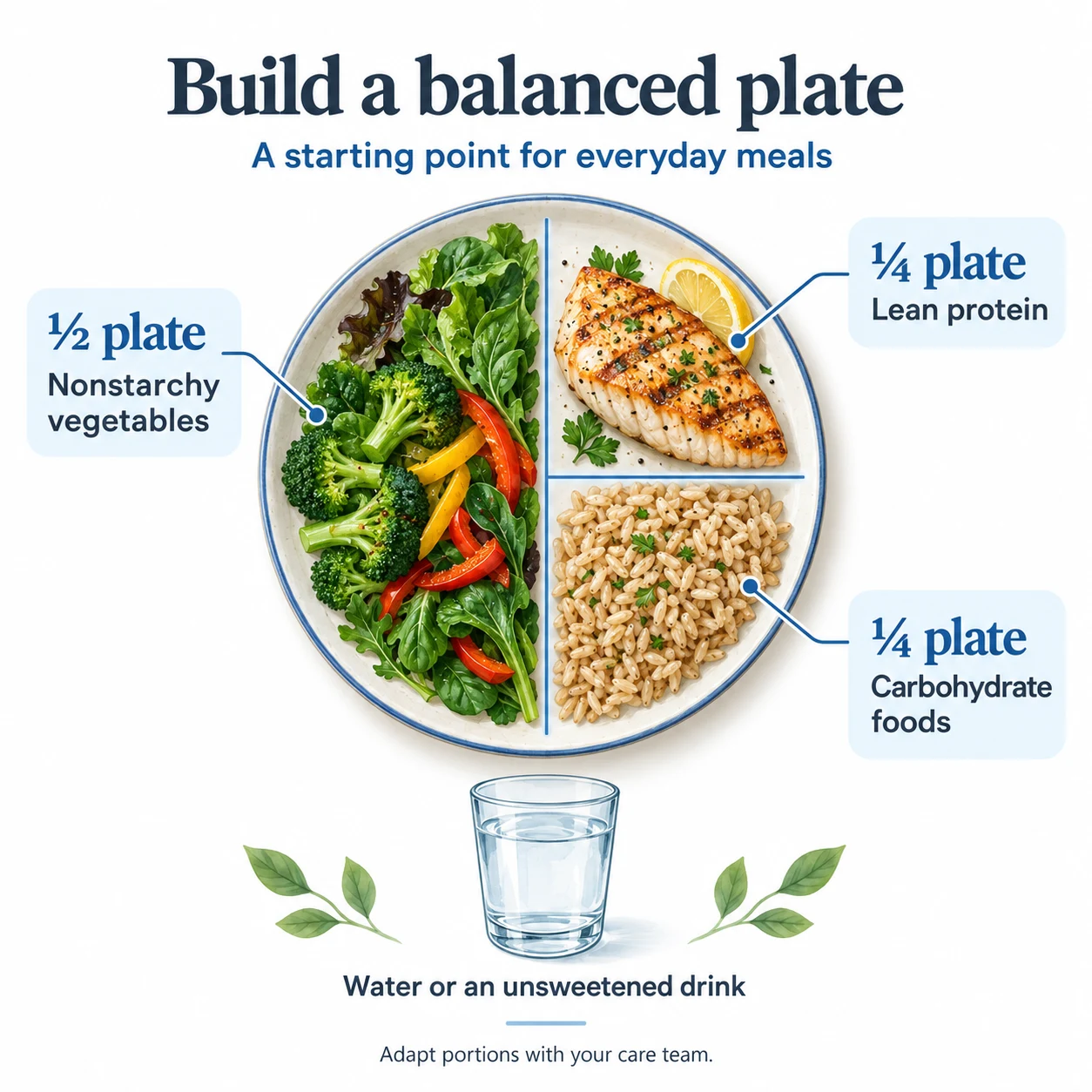
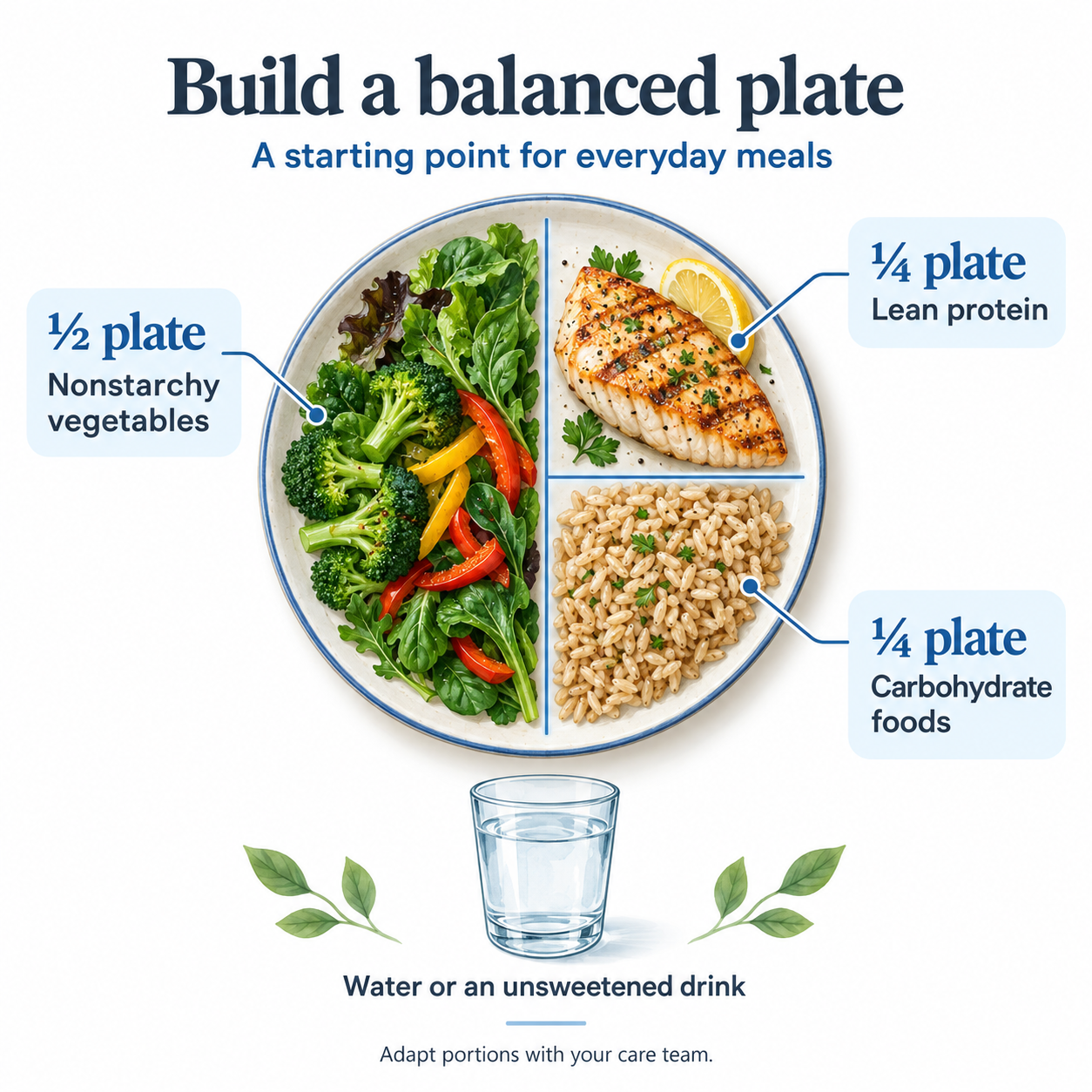
For example, dinner might be broccoli and peppers, grilled fish, and brown rice. Prefer tofu? It can take the protein portion. Use the picture as a starting point, with portions adapted to your needs.
Make room for the foods you enjoy
Rice, bread, potatoes, fruit, and beans contain carbohydrates. Portion size matters, and your care team can help you work familiar foods into your meals. Beans and lentils provide protein as well as carbohydrates, so include them when discussing your carbohydrate portions.
If you often eat rice or roti, bring an example of your usual meal to a dietitian visit. Ask how to balance its portions with vegetables and protein. You do not need a separate set of “diabetic” foods to start that conversation.
Look beyond the sugar line
On packaged foods, check the serving size and total carbohydrate. Total carbohydrate includes starch, sugar, and fiber. A “no added sugar” claim does not tell you the total amount of carbohydrate in a serving. If your portion is twice the labeled serving, the carbohydrate amount doubles too.
Try comparing two foods you already buy. Notice the serving sizes before comparing their numbers. Ask your clinician or dietitian whether carbohydrate counting would be useful for you and how to approach it.
Choose one change you can repeat
You might replace your usual sweet tea with unsweetened tea, add a vegetable to dinner, or choose whole fruit more often than juice. Whole fruit contains fiber, and juice can raise blood sugar more quickly.
Choose something that fits your budget, cooking time, and appetite. Write down what made it easy or difficult. That gives you and your care team something specific to work with at the next visit.
Keep meals and medicines connected
Skipping or delaying meals can cause low blood sugar when you use insulin or certain diabetes medicines. Discuss major changes to your eating pattern with your care team, and keep taking medicines as prescribed unless your prescriber changes them. Ask for a meal plan suited to your other health conditions and whether a registered dietitian can help.
Bring these questions to your next visit
- What HbA1c target makes sense for me?
- How should meals fit around my medicines and work schedule?
- Would a dietitian or diabetes education program help?
- When should we check my HbA1c again?
For help arranging a visit with LiveWell, call (843) 202-0193.
This article provides general education and does not replace advice from your own care team.